

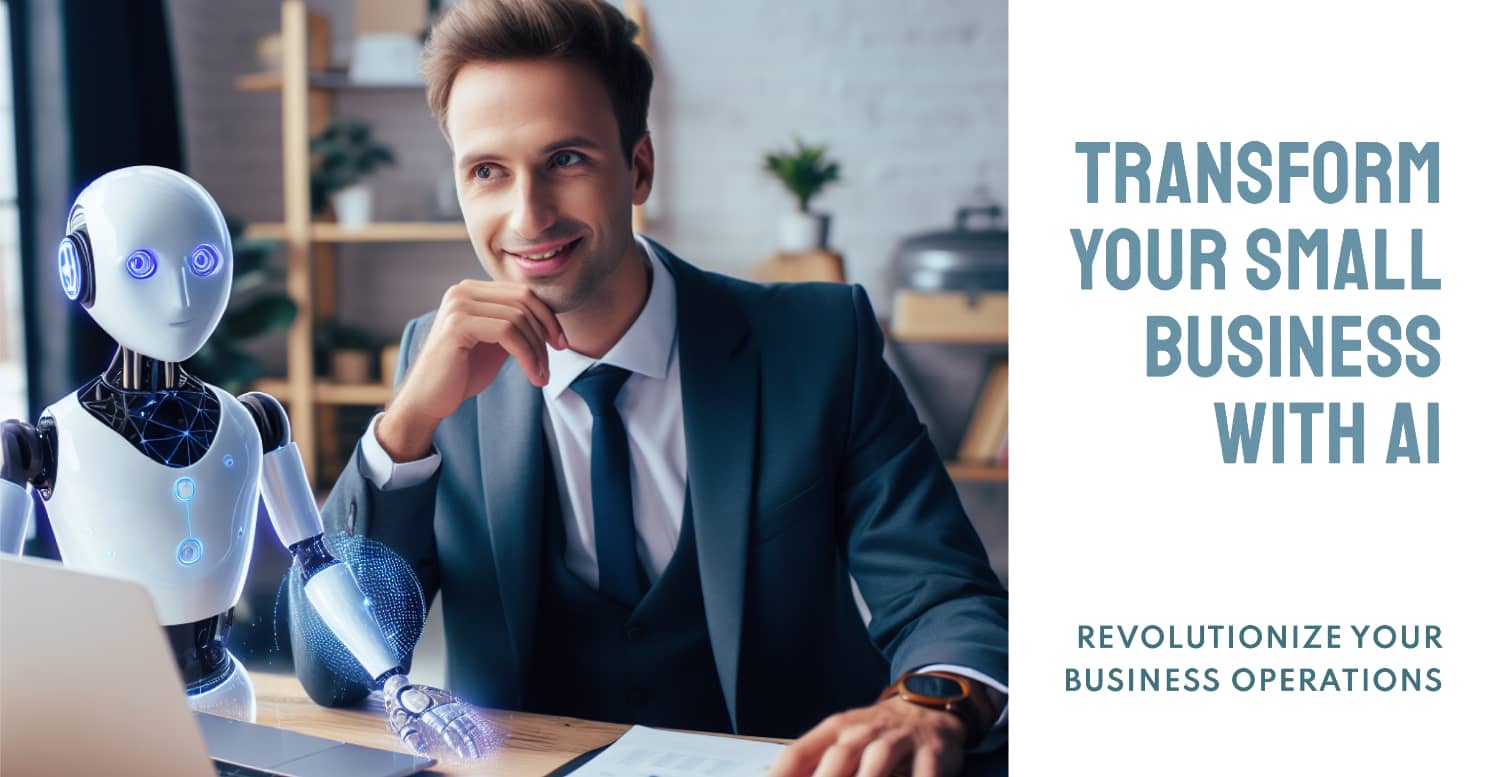
AI Automation for Small Business: Unlock Growth with Smart Solutions
Estimated reading time: 10 minutes
Key Takeaways
- AI automation is no longer just for big companies; it’s becoming essential and accessible for small businesses to thrive.
- It significantly boosts productivity, cuts operational costs, and elevates the customer experience through personalized interactions.
- Practical applications range from transforming customer service with AI chatbots to optimizing marketing, sales, and administrative tasks.
- A wide array of user-friendly and affordable AI tools (often no-code/low-code SaaS) are available, designed to integrate seamlessly with existing systems.
- Successful implementation involves a strategic approach: identifying key pain points, starting with pilot projects, training your team, and continuously measuring results.
- The future promises even more advanced, proactive, and ethically responsible AI, emphasizing human-AI collaboration to unlock sustained growth.
Table of contents
- AI Automation for Small Business: Unlock Growth with Smart Solutions
- Key Takeaways
- 1. Introduction: The Dawn of Efficiency for Small Business
- 2. What is AI Automation and Why It’s Crucial for Small Businesses?
- 3. Key Benefits: How AI Automation Fuels Small Business Success
- 4. Practical Applications: Where Small Businesses Can Leverage AI Workflow Automation
- 5. Exploring Essential AI Business Solutions and Tools for Small Businesses
- 6. Implementing AI Automation in Your Small Business: A Step-by-Step Guide
- 1. Identify Pain Points: Where AI Can Make the Biggest Impact
- 2. Start Small: Pilot Projects to Test and Learn
- 3. Choose the Right Tools: Aligning Solutions with Needs
- 4. Integration: Seamlessly Incorporating New Tools
- 5. Training & Adaptation: Preparing Your Team
- 6. Measuring Success: Tracking ROI and Refining Strategies
- 7. The Future of AI Automation for Small Business
- 8. Conclusion: Empower Your Business with AI
- Frequently Asked Questions
1. Introduction: The Dawn of Efficiency for Small Business
Imagine a world where your small business runs smoother, customers are happier, and you have more time to focus on what truly matters. This isn’t a dream; it’s the promise of AI automation for small business.
Navigating Today’s Small Business Landscape
Running a small business today is like navigating a busy maze. You face many challenges every single day. Things like your costs going up, finding great people to work for you, and trying to stand out from bigger companies with lots of money can be tough. On top of that, your customers always want new and better things.
The world has changed a lot since the pandemic, making it even more important for businesses to be strong and use digital tools. This constant pressure makes small business owners look for smart ways to work better and faster. [Forbes, Entrepreneur]
Introducing AI Automation as a Game-Changer
This is where AI automation for small business comes in. It’s a powerful tool that helps your business not just get by, but truly shine. This clever technology lets you do more with less, which is super important when you don’t have endless money or staff. It helps you deal with these limits and compete fairly by making your everyday work run much smoother. This intelligent way of doing business is often called artificial intelligence business automation.
The Democratization of AI
For a long time, only really big companies could use advanced technology like artificial intelligence business automation. But not anymore! Now, there are many easy-to-use tools that bring the power of AI to small businesses like yours.
Think of it this way: AI isn’t just about computers taking over human jobs. It’s actually about helping people do their jobs better and faster. It makes things incredibly efficient, more accurate, and helps you connect with your customers in a very personal way. [McKinsey & Company, Deloitte, Harvard Business Review]
Blog Post Goal
Our goal in this blog post is to give you a clear and helpful guide. We want to show small businesses like yours how to use AI automation for small business to find new ways to grow and stay ahead of the competition for a long time. Get ready to learn how smart solutions can transform your business!
2. What is AI Automation and Why It’s Crucial for Small Businesses?
Before we dive into how AI can help, let’s make sure we understand exactly what it is.
Defining AI Automation for Small Business
AI automation for small business means using smart computer programs to do tasks that people usually do. But here’s the cool part: these programs don’t just follow simple instructions. They learn, they adapt, and they get smarter over time, just like a person would!
Let’s compare it to old-school automation. Imagine a simple machine that always does the same thing: if you push button A, it does action B. That’s traditional automation – it follows strict rules you gave it. But AI automation for small business is different. It uses clever computer brains, like machine learning automation tools, natural language processing (which helps computers understand human talk), and computer vision (which helps them “see” things). These smart tools let AI understand what’s happening, make good choices, guess what might happen next, and keep getting better at its job without you having to constantly reprogram it.
For example, a traditional chatbot might only understand if you type exact words like “order status.” But an AI chatbot can understand phrases like “Where’s my package?” or “Has my delivery shipped?” and learn from your questions to give better answers next time. [IBM, Google Cloud]
Why AI’s Adaptive Nature is Crucial for Small Businesses
The ability of AI to learn and adapt is super important for small businesses. Here’s why:
- Leveling the Playing Field: AI helps small businesses get access to fancy tools that only big companies used to have. Think about knowing what your customers will want next or sending them messages that feel specially made for them. These capabilities help you compete head-on with much larger businesses. [Entrepreneur]
- Resource Optimization: Small businesses often have to be smart with their money and staff. AI automation for small business helps by taking over boring, everyday jobs. This includes things like putting data into computer systems or answering simple customer questions. When AI handles these tasks, your employees are free to do more important work, like coming up with new ideas, planning for the future, and talking directly with customers. This is incredibly helpful when you have a small team and a limited budget. [Forbes]
- Scalability: When your business grows, you don’t want to get bogged down. Artificial intelligence business automation lets your systems handle more work without needing to hire lots more people. This means your business can grow smoothly, whether it’s during busy times or when you’re expanding. Plus, AI can work 24 hours a day, 7 days a week, making sure your customers always get great service. [ERP and CRM solution experts]
3. Key Benefits: How AI Automation Fuels Small Business Success
Bringing AI automation for small business into your company offers many great advantages. It’s like giving your business a turbo boost!
Increased Productivity & Efficiency
AI is really good at taking care of those little jobs that eat up a lot of time. Think about writing down customer details, setting up meetings, sorting through emails, or answering basic questions from customers. When AI handles these tasks, your team can focus on harder problems, coming up with new ideas, and building stronger relationships with your customers. This means your business can get more done with the same number of people, and you can be more flexible when things change. This is often called AI workflow automation because it makes your work processes flow so much better. [McKinsey & Company]
Cost Reduction
AI can help you save money in a few ways. First, it cuts down on the amount of work people need to do for routine jobs, which lowers your costs for staff. Second, computers make fewer mistakes than people do, and fixing mistakes can be very expensive. For example, using AI to process invoices can greatly reduce accounting errors and the time your staff spends on these tasks, directly saving you money. [Deloitte]
Enhanced Customer Experience
Customers love quick, helpful, and personal service. AI makes this possible! An AI chatbot for small business can talk to customers any time of day or night, answering common questions and solving problems super fast. [Gartner]
AI can also look at what your customers have bought or looked at before. Then, it can suggest other products they might like or send them special marketing messages that really fit their interests. This makes customers feel special and happy, which builds strong loyalty. [Harvard Business Review]
Data-Driven Decisions
Sometimes, small businesses make decisions based on a “gut feeling.” But what if you had clear facts to guide you? Artificial intelligence business automation tools can look at huge amounts of information, like what your customers buy, what sales trends are popular, or how the market is changing. AI can find patterns, guess what demand will be like, and predict what might happen in the future. This smart information helps you make better choices about what to stock, how to price things, what marketing campaigns to run, and even what new products to create. You move from guessing to using solid evidence. [MIT Technology Review]
Competitive Advantage
Choosing to use AI automation for small business means your company can create new ideas faster, offer better services, and work more efficiently than others who stick to old ways. Being quick to adapt, giving customers special experiences, and using smart data to make choices helps your small business gain a real advantage. Businesses that start using smart technologies early will be much more important and grow more in the long run. [Forbes, Entrepreneur]
4. Practical Applications: Where Small Businesses Can Leverage AI Workflow Automation
Now that you know the benefits, let’s look at exactly where you can use AI workflow automation in your small business today.
Customer Service Transformation
Imagine your customer service working non-stop, even when you’re sleeping! Implementing an AI chatbot for small business on your website means customers get instant help, 24 hours a day, 7 days a week.
These intelligent virtual assistants can:
- Answer common questions (FAQs) instantly.
- Guide customers through simple problem-solving steps.
- Give updates on orders or deliveries.
- Even ask questions to find out if someone is a serious potential customer before a human takes over.
Many popular customer service platforms, like Zendesk and Intercom, already offer AI-powered chatbots that help businesses respond faster and make customers happier. [Zendesk, Intercom]
Revolutionizing Marketing & Sales
AI workflow automation can supercharge your efforts to find and keep customers.
- Lead Generation: AI tools can look at what people do online and their information to find new potential customers who are most likely to buy from you.
- Personalized Email Campaigns: AI can sort your customers into groups and then write emails with special content, catchy subject lines, and even send them at the best time for each person. This makes people much more likely to open and act on your emails, boosting sales. Tools like Mailchimp and HubSpot use AI for this.
- CRM Updates: Your customer relationship management (CRM) system can stay perfectly updated. AI can automatically record when you talk to customers, update their profiles, and even suggest the next steps for your sales team. This keeps all your customer information accurate and ready to use.
- Content Creation: Need ideas for your blog, social media posts, or product descriptions? AI writing assistants can help you brainstorm and even draft content quickly, so you can share more with your audience.
[TechCrunch, HubSpot]
Streamlining Operations Management
AI workflow automation can make your behind-the-scenes work incredibly smooth.
- Inventory Management: AI can guess how much of each product your customers will want. This helps you order just the right amount, so you don’t run out of popular items or have too much of what people aren’t buying. It can also warn you about problems in your supply chain. [specialized retail management software]
- Supply Chain: AI can figure out the best ways to move your products around, track where shipments are, and find better ways to work with your suppliers.
- Scheduling: For businesses that rely on appointments or shifts, AI-powered tools can create the best employee schedules, manage customer appointments, and make sure you have the right people and tools available when needed.
Automating Administrative Tasks
Many everyday office jobs take up a lot of time but are perfect for AI workflow automation.
- Data Entry: Imagine never having to manually type in information from invoices or forms again! AI tools that use optical character recognition (OCR) and robotic process automation (RPA) can read documents and put the data into your computer systems very accurately.
- Document Processing: AI can sort, tag, and send documents to the right place. This makes it much easier to find information and ensures you follow all the rules.
- Appointment Setting: AI assistants can manage your calendar, send reminders to people with appointments, and even reschedule for them. This means fewer missed appointments and less time spent on administrative tasks.
Enhancing Financial Management
AI can bring new levels of accuracy and insight to your business’s money matters.
- Expense Tracking & Invoice Processing: AI can automatically sort your spending, match up transactions, and process invoices. This saves a lot of manual work and helps prevent errors. Many tools like QuickBooks and Xero offer AI integrations for this.
- Fraud Detection: Smart AI programs can look at how money moves in and out of your business. If they see anything unusual, they can flag it as possible fraud, giving your small business an important layer of security.
- Budgeting & Forecasting: AI can look at your past money data and what’s happening in the market to give you much clearer ideas about how much money you’ll have and where it will go.
[QuickBooks, Xero integrations, QuickBooks Small Business Insights]
These examples show how AI workflow automation can connect different parts of your business, creating smart, smooth processes that really help you grow.
5. Exploring Essential AI Business Solutions and Tools for Small Businesses
Good news! The market for AI tools for small business is huge and growing fast. There are so many AI powered business tools and AI business solutions that are both easy to use and affordable for businesses just like yours.
Overview: Accessible AI for Small Businesses
You don’t need to be a tech wizard to use AI. Many tools are designed to be user-friendly, reducing big upfront costs and maintenance headaches.
- No-Code/Low-Code AI Platforms: These tools let you build and use AI without needing to write complex computer code. They’re perfect for business owners and staff who aren’t tech experts.
- SaaS (Software as a Service) AI: Most AI tools come as a subscription, meaning you pay a monthly fee to use them over the internet. This saves you from buying expensive software and hardware.
- Integration Capabilities: The best AI tools can easily connect with the software you already use, like your customer management system (CRM), accounting software, or marketing platforms.
[G2, Capterra, TechRadar Pro, PCMag Business]
Specific Examples and Use Cases:
Let’s look at some popular AI business solutions and how they help.
- AI Chatbot for Small Business Platforms:
- Examples: Zendesk Answer Bot, Intercom Bots, Drift, Tidio, HubSpot Chatbot are popular choices.
- Use Cases: These smart bots live on your website or social media. They provide instant customer support, answer common questions, figure out if someone is a good sales lead, help visitors find product info, and even book appointments. They use Natural Language Processing (NLP) to understand what customers mean when they type a question.
- Machine Learning Automation Tools:
- Examples: Many popular tools now have machine learning (ML) built-in. Think of AI sales assistants like Pipedrive, predictive email sending in ActiveCampaign, smart insights from Google Analytics, or data visualization with AI in Microsoft Power BI. Many customer relationship management (CRM) systems also use ML.
- Use Cases:
- Predictive Analytics: Guessing future sales trends, knowing when a customer might stop buying from you, or finding the best time to talk to potential customers.
- Personalized Recommendations: Suggesting products or content that customers will love based on what they’ve done before.
- Advanced Data Processing: Looking through massive amounts of data to find hidden patterns that can help you optimize your marketing spending or make your products better.
- Smart Automation Software:
- Examples: While not always pure AI, tools like Zapier (with AI connections), Make (formerly Integromat), UiPath (for small-scale robotic process automation, RPA), Microsoft Power Automate, and Tray.io help different apps talk to each other and automate tasks. They often connect to AI services to make them even smarter.
- Use Cases: These tools create amazing, seamless workflows, such as:
- Automatically adding new sales leads from social media posts straight into your CRM.
- Sending personalized follow-up emails to people based on what they did on your website.
- Building reports by pulling information from many different places.
- Automating how you process invoices and categorize expenses by connecting with accounting software that uses AI to read documents.
[G2, Capterra, TechRadar Pro, PCMag Business]
Tips for Evaluating and Choosing the Right AI Tools:
Picking the right AI tools for small business can feel like a big decision. Here are some simple steps to help you choose the best AI business solutions:
- Identify Specific Pain Points: First, think about what’s really bothering you in your business. Is it slow customer service? Too much manual data entry? Focus on where AI can make the biggest difference.
- Ease of Use: Look for tools that are simple to understand and use, without needing a lot of technical knowledge.
- Integration Capabilities: Check if the tool can easily connect with the software you already use, like your CRM, accounting, or marketing tools.
- Scalability: Choose tools that can grow with your business. You don’t want to switch tools again in a year if you expand.
- Cost-Effectiveness: Compare how much different tools cost (their subscription plans and features) and think about how much money they will save or earn you. Look for a clear return on investment (ROI).
- Support and Resources: Make sure the company selling the tool offers good customer help, helpful guides, and a community where you can ask questions.
- Pilot Projects: Don’t go all-in at once! Try out the tool on a small part of your business first to see how well it works and if it fits your needs.
6. Implementing AI Automation in Your Small Business: A Step-by-Step Guide
Bringing AI powered business tools into your small business can sound daunting, but it doesn’t have to be. By following these steps, you can introduce intelligent automation smoothly and effectively.
1. Identify Pain Points: Where AI Can Make the Biggest Impact
Before you buy any tools, take a good look at your business.
- Process: Start by checking your daily work to find out what causes delays, where things get stuck, or what repetitive jobs take up too much time and money. Talk to your employees and ask them what frustrates them most about their daily tasks.
- Focus: Look for tasks that happen very often, are boring and repetitive, follow clear rules (even if those rules are complicated), and where people often make mistakes. Examples include answering the same customer questions over and over, typing information into computers, scheduling things, or making basic reports.
- Goal: This first step ensures that your initial investments in AI powered business tools go to the areas where they will help the most and show clear results quickly.
[Accenture, PwC]
2. Start Small: Pilot Projects to Test and Learn
Don’t try to automate everything at once!
- Strategy: Instead, pick one or two specific, low-risk areas to try out AI. For example, you could use an AI chatbot for small business to answer common questions on your website, or automate a simple data entry process.
- Benefits: Trying things out on a small scale lets your team learn, adjust, and make the AI business solutions better without messing up important parts of your business. It gives you helpful feedback, helps you find any unexpected problems, and shows early results. This builds confidence and gets everyone on board.
- Metrics: Decide what you want to achieve with your test project. For instance, do you want faster response times, fewer mistakes, or to save a certain amount of time?
3. Choose the Right Tools: Aligning Solutions with Needs
Once you know what problems you want to solve, it’s time to pick the right tools.
- Alignment: Make sure the AI business solutions you choose directly fix the problems you found and help you reach your business goals.
- User-Friendliness: Look for tools made for small businesses. These often don’t need you to write computer code, making them easy to set up and manage even if you’re not a tech expert. Review sites like Gartner, G2, and Capterra can help you find good options. [Gartner, G2, Capterra reviews]
- Affordability: Check the prices. Most AI tools are subscription-based, so make sure the monthly cost fits your budget and gives you all the features you need.
- Vendor Support: Pick companies that offer good customer help, training materials, and clear instructions.
4. Integration: Seamlessly Incorporating New Tools
Your new AI powered business tools need to work well with your existing systems.
- Goal: The aim is to smoothly add new AI tools into your current software, like your CRM, accounting software, or marketing platforms.
- Methods: Many modern AI tools have special connections called APIs (Application Programming Interfaces) or ready-made connectors (like those found in Zapier or Make). These allow different systems to share information and enable AI workflow automation across your business.
- Data Flow: Think about how information will move between your old systems and the new AI tools. This helps keep all your data consistent and prevents it from getting stuck in separate places.
5. Training & Adaptation: Preparing Your Team
Remember, AI is about helping people, not replacing them.
- People-Centric Approach: Give good training to everyone who will use or be affected by the new AI systems.
- Focus on Augmentation: Explain that AI is there to make their jobs easier and free up their time for more creative, important thinking, and helping customers in a human way. It’s not about taking jobs away.
- Change Management: Listen to your employees’ worries, clearly explain how AI will help them, and ask for their ideas. This helps everyone feel positive about the new technology.
[Harvard Business Review]
6. Measuring Success: Tracking ROI and Refining Strategies
After you’ve put AI into action, it’s important to check if it’s actually helping.
- ROI Metrics: Keep an eye on key numbers that relate to the problems you wanted to solve. For example, check if you’ve lowered costs (like less staff time on certain tasks), if customer happiness scores have gone up, if you’re responding to customers faster, if more leads are turning into sales, how much time you’ve saved on office jobs, and if there are fewer errors.
- Iteration & Refinement: Use the information you collect to see how well your AI automation for small business is working. Find ways to make it better and keep adjusting your plans. Even though AI systems learn on their own, people still need to watch over them and make changes to ensure they work their best.
7. The Future of AI Automation for Small Business
The world of artificial intelligence business automation is always changing, and for small businesses, it promises even more exciting things ahead.
Emerging Trends in Artificial Intelligence Business Automation
Experts in technology and business point to some big trends that will shape how small businesses use AI:
- Hyper-Personalization at Scale: Imagine giving every single customer an experience that feels perfectly tailored for them, all the time. AI will make this possible, from product suggestions just for them to marketing messages that speak directly to their needs, and even proactive help before they even ask. [Gartner, Forrester]
- More Accessible, “No-Code” AI: It will become even easier for small business owners and their teams to use fancy smart automation software without needing to know how to code. This means more small businesses can use AI without having to hire expensive tech experts. [Forbes, MIT Technology Review]
- Intelligent Process Automation (IPA) & Hyperautomation: Beyond just automating simple tasks, future artificial intelligence business automation will combine AI, machine learning automation tools, and robotic process automation (RPA) to automate entire, complex workflows. This is called Intelligent Process Automation (IPA). Even further, “Hyperautomation” (a term from Gartner) means that anything that can be automated should be, with AI acting as the clever brain connecting all the different parts of your business for comprehensive AI workflow automation.
- Proactive & Predictive AI: AI will get even better at guessing what might happen in the future and telling you what to do before problems come up. This could mean AI telling you when a machine needs fixing, predicting when a customer might leave, or even suggesting the best business plans in real-time.
- Enhanced Human-AI Collaboration: The future isn’t about AI replacing people. It’s about AI working hand-in-hand with people. AI will be like a super-smart helper, giving people insights, handling boring tasks, and letting human employees focus on being creative, planning, and solving tough problems that need a human touch.
- Ethical AI and Trust: As AI becomes more common, it’s important to think about things like keeping customer information private and making sure AI is fair to everyone. Small businesses will need to use AI in a way that builds trust with their customers. Developing responsible AI practices will be very important. [Gartner, Forrester, Forbes, MIT Technology Review]
Long-Term Benefits and Sustained Growth Potential
Choosing to use smart automation software and other AI business solutions isn’t just for quick wins; it’s about making your business strong and successful for many years to come. Small businesses that use AI smartly will be tougher, quicker to adapt, and more competitive. They will be better able to handle changes in the market, create new products and services, attract and keep customers with great experiences, and use their money and resources wisely to stay profitable. AI will become a key ingredient for growth, helping small businesses reach more people, develop new offerings, and truly thrive in our increasingly digital world.
8. Conclusion: Empower Your Business with AI
Summarizing the Transformative Power
In short, AI automation for small business is no longer just a nice-to-have; it’s essential for success. This smart technology can completely change how small businesses work, how they compete, and how they grow. From making your operations more efficient and cutting down costs, to giving your customers amazing experiences and helping you make decisions based on clear facts, AI business solutions offer a powerful toolkit to overcome challenges. [Forbes, Entrepreneur]
Recap of the Implementation Journey
Remember our journey: it starts with finding your business’s biggest headaches, then trying out new tools with small, manageable projects. Next, you pick user-friendly AI powered business tools, connect them smoothly with your existing systems, and prepare your team for this exciting change. It’s crucial to see AI not as a replacement for human cleverness, but as a powerful helper that frees up your valuable staff to do more creative, strategic, and heartfelt work.
Final Call to Action
The future is here, and it’s intelligent. We encourage you to explore the many easy-to-use and affordable AI business solutions available today. Think about where AI could make the biggest positive difference in your own business. Don’t be afraid to start this journey. By empowering your business with intelligent automation, you can confidently thrive in today’s competitive world and keep growing into tomorrow.
Frequently Asked Questions
- What is AI automation for small businesses?
AI automation for small businesses involves using intelligent computer programs to automate tasks that traditionally require human effort. Unlike traditional automation, AI learns, adapts, and improves over time, utilizing technologies like machine learning and natural language processing to make smart decisions and perform tasks more efficiently.
- How can AI automation specifically benefit a small business?
AI automation provides numerous benefits, including increased productivity by handling repetitive tasks, significant cost reduction through fewer errors and optimized resource allocation, enhanced customer experiences with 24/7 support, data-driven decision-making, and a competitive advantage by enabling faster innovation and greater efficiency.
- Are AI tools expensive for small businesses?
No, many AI tools are now designed to be affordable and accessible for small businesses. They often come as Software as a Service (SaaS) subscriptions, reducing upfront costs, and many are “no-code” or “low-code,” meaning you don’t need to hire expensive technical experts to implement them.
- Do I need technical expertise to implement AI automation?
Not necessarily. While some advanced AI applications require technical knowledge, a growing number of AI tools for small businesses are user-friendly, with intuitive interfaces and drag-and-drop functionalities. Many vendors also offer comprehensive support and training to help you get started.
- Will AI automation replace human jobs in my small business?
The goal of AI automation for small businesses is typically to augment, not replace, human employees. By taking over repetitive and time-consuming tasks, AI frees up your team to focus on more creative, strategic, and customer-facing activities that require human critical thinking and empathy, ultimately enhancing job satisfaction and overall business performance.
- How do I get started with AI automation in my small business?
Start by identifying specific “pain points” or repetitive tasks in your business that consume a lot of time or resources. Then, choose one or two low-risk areas for a pilot project. Select user-friendly AI tools that integrate with your existing systems, train your team, and continuously measure the impact to refine your strategy.
- What are some examples of AI tools for small businesses?
Popular AI tools include AI chatbots for customer service (e.g., Zendesk Answer Bot, Intercom Bots), marketing automation platforms with AI (e.g., HubSpot, Mailchimp for personalized emails), CRM systems with machine learning for predictive analytics (e.g., Pipedrive), and smart automation software (e.g., Zapier, Make) that connect various applications and leverage AI for workflows like data entry and expense tracking.